Rural Life in the Highlands: The Practical Realities Behind the Scenery
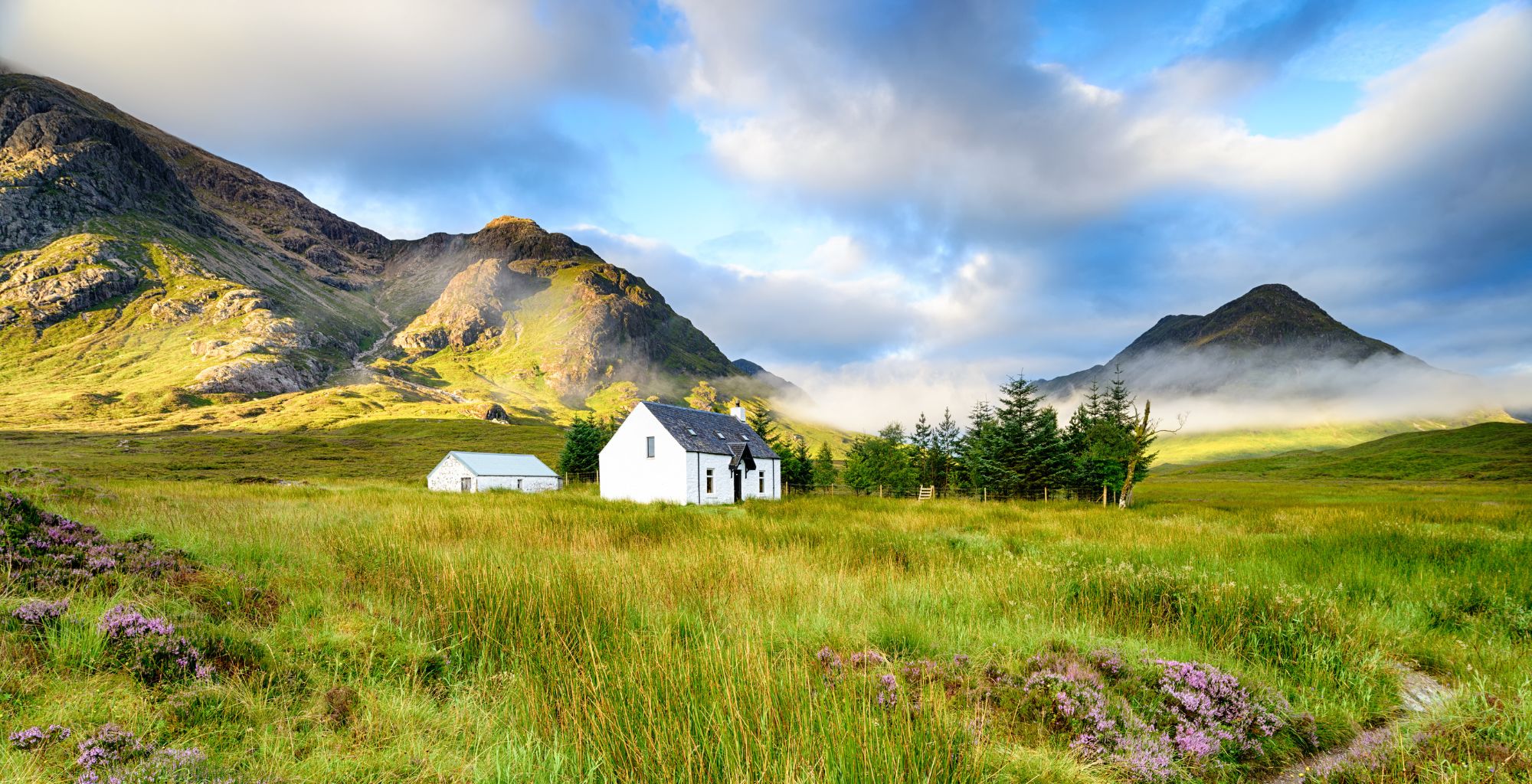
Living a Rural Life in the Highlands is one of those ambitions that stays with people. A week’s holiday becomes a returning thought, then a serious conversation, then a property search.
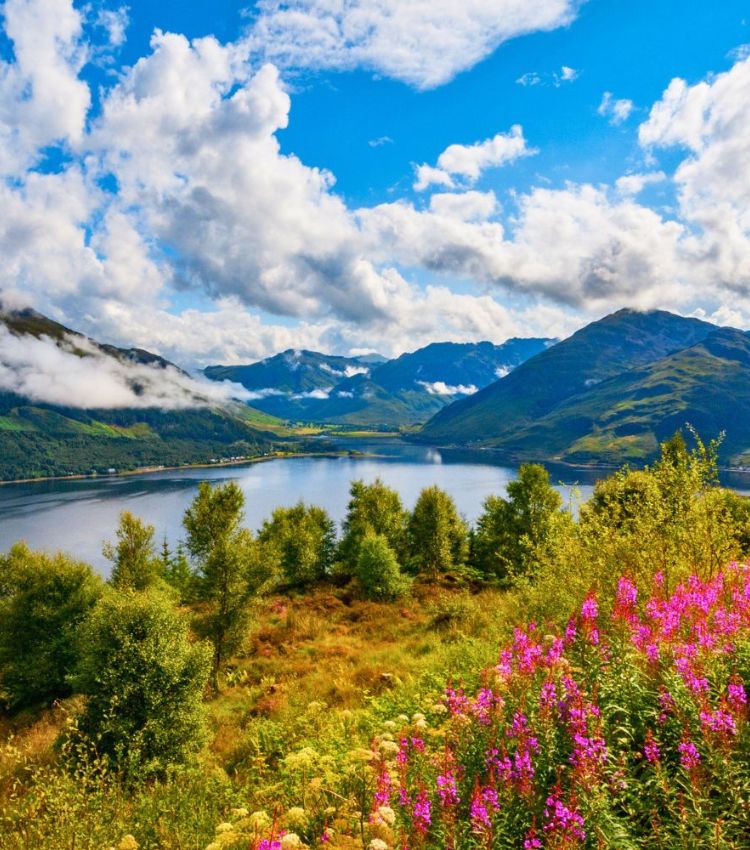
The pull is understandable: few places in Britain offer this combination of space, dramatic beauty, and an unhurried pace of life. That is true whether you are drawn to the mainland Highlands or to the communities of the Islands.
But making the move, rather than simply dreaming about it, calls for a different kind of attention. The word “rural” appears in almost every property listing and estate agent conversation in this part of Scotland. What it rarely comes with is a clear sense of what rural life in the Highlands means day to day.
In the Home Counties or the Cotswolds, rural might mean a village with a pub, a church, and a twenty-minute drive to a market town. In the Highlands, it often means something broader. Understanding those practicalities before you commit is what turns a good idea into a successful move.

Rural life in the Highlands: A spectrum, not a single experience
The Highland Council area alone covers more than 10,000 square miles (26,000 square kilometres), roughly a third of Scotland’s land mass, and the character of rural life varies enormously depending on where within it you settle.
A property on the outskirts of Inverness or within easy reach of Dingwall sits in accessible rural territory: shops, schools, healthcare, and transport links are all within a comfortable drive. Daily life is quieter than in a city but runs on familiar terms, and many people living in the Highlands around these areas enjoy the best of both worlds.
Move further out, to communities such as Gairloch in Wester Ross or Durness on the north coast, and the rhythm changes. The nearest large supermarket may be an hour’s drive in fair conditions. Services are fewer, but the compensations, such as the scenery, the space, and the quality of light, are extraordinary.
For those who plan around it, remote Highland life can be immensely fulfilling.
Beyond that, the north-west coast offers something rarer still: the kind of seclusion where your nearest neighbour is a mile away, and silence is the default setting. Buyers drawn to these areas tend to know exactly what they want, and they find it in abundance.
Each setting carries different implications for property value, running costs, and resale. The key is to be honest about where on this spectrum you would thrive.
Infrastructure: What to check before you view
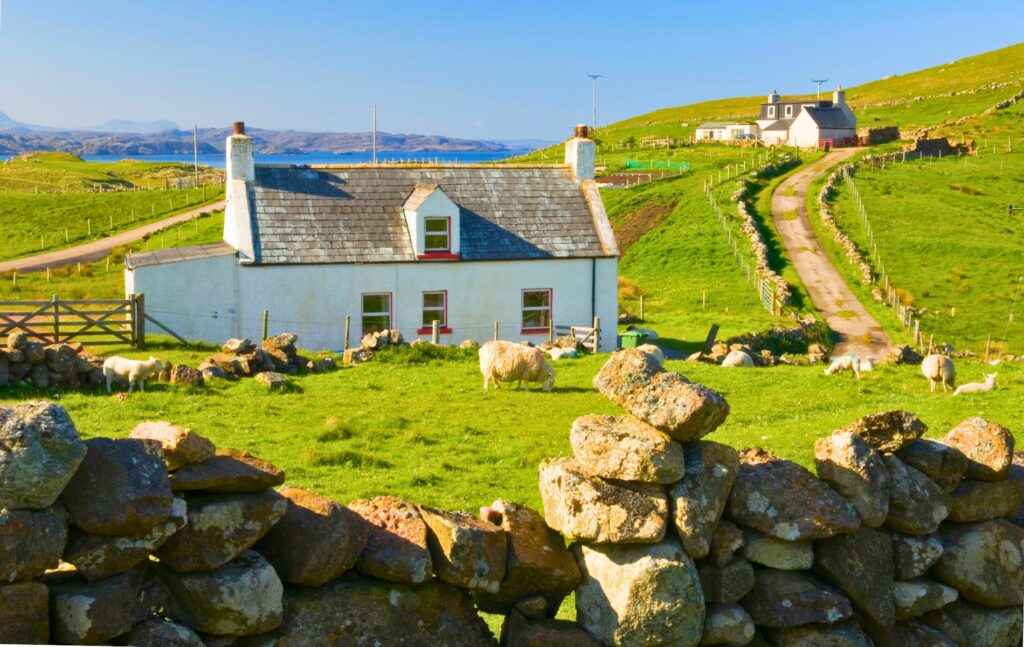
One of the practical advantages of rural life in the Highlands is that many properties come with a degree of self-sufficiency built in. But this also means that the infrastructure questions worth asking here are different from those you might consider further south.
Much of the Highland housing stock sits off the mains gas grid. Heating is typically provided by oil, LPG, or solid fuel, and it is worth understanding the cost and logistics of fuel delivery, particularly during winter months in more remote locations.
The Scottish Government’s R100 programme has improved broadband reach across the region, though coverage remains variable. In some areas, superfast fibre is available. In others, satellite broadband, fixed wireless, or another alternative may be the realistic option, so address-level checks are essential.
Mobile signal is strong in and around Inverness, but can be intermittent in more remote areas; buyers should check Ofcom and network coverage maps for the specific property.
Private water supplies are common in rural Highland properties, and with them come maintenance responsibilities, including registration, treatment, and upkeep. Private sewage discharges may need SEPA authorisation or registration and ongoing maintenance. None of this is prohibitive, but it is best understood before you fall in love with a property rather than after.
This is precisely the kind of assessment a property finder undertakes before a client views a property. One couple Garrington worked with were relocating from a major city, with remote working at the centre of their plans. Reliable broadband and proximity to transport links were not preferences but requirements. By assessing the practical realities of each location in detail, the right home was identified near Inverness and secured at Home Report valuation without competitive escalation.
Access, seasonality, and the land around you
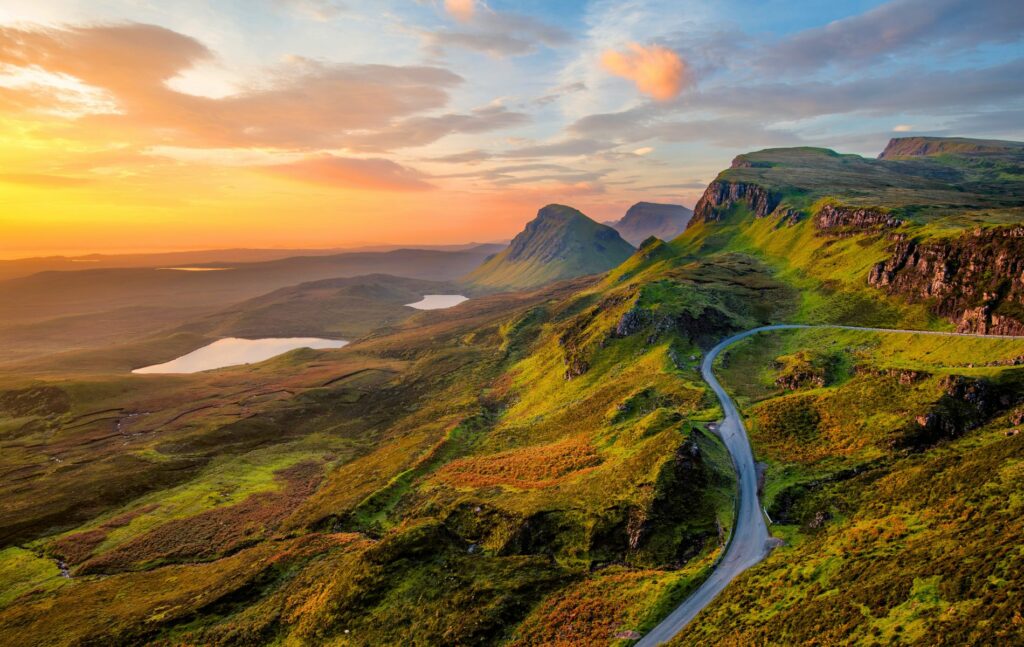
A single-track road in August, with passing places and long views ahead, is one of the pleasures of Highland driving. In January, with shorter days and the possibility of ice, the same road asks more of you. This is part of the rhythm of rural life in the Highlands, and most residents adapt to it quickly, but it is worth experiencing before you buy.
The A9 is the transport spine connecting much of the region. West coast properties, however, often depend on roads like the A87 to Skye, the A835 through Wester Ross, or the Bealach na Ba above Applecross, which can become more challenging in winter.
Ferry services to coastal communities and the Islands run to timetables that weather can occasionally disrupt, and for buyers considering locations on the west coast or across to the Hebrides, Orkney, or Shetland, understanding these connections is an important part of the decision.
Buying a Highland property means becoming part of the working land around it, and for many buyers, this is part of the appeal.
Livestock graze neighbouring fields, forestry and farming shape the calendar, and sporting estates manage deer, grouse, and salmon across the surrounding area, giving the seasons a visible structure. The land here is not a backdrop but a living, working presence, and that connection to the natural environment is something residents come to value deeply.
The best preparation is to visit at different times of year. If the property and its setting feel right in February, they will feel even better in June.
Community and fitting into rural life in the Highlands
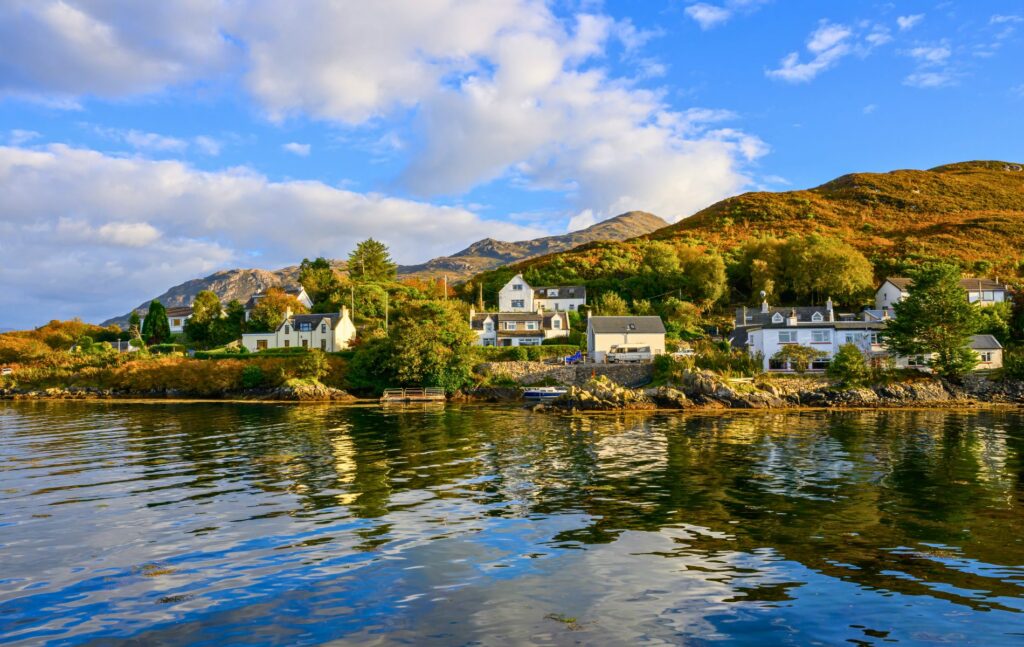
What the Highlands may lack in urban convenience, many people find they make up for in the quality of community. Smaller populations create closer connections. Neighbours look out for one another, particularly in difficult weather or when someone needs a hand.
For many people who move here, this warmth and mutual support become one of the most valued aspects of Highland life, though experiences vary by place and by how actively newcomers participate.
Highland communities tend to welcome those who get involved. Attending local events, supporting local businesses, and contributing where there is a need: these are the natural ways to become part of the fabric of a place.
Many new arrivals find they are made to feel at home more quickly than they expected.
It is helpful, though, to understand the wider context. In some areas, demand for second homes has placed pressure on local housing availability, and community councils and crofting trusts are engaged voices on these issues. Buyers who arrive with an awareness of this, and a willingness to be good neighbours, find that it makes the experience of rural life in the Highlands all the richer.
One practical point to be aware of: some Highland properties carry crofting status, which can involve legal duties including ordinary residence on or within 20 miles (32 kilometres) of the croft, as well as cultivation and maintenance obligations. For buyers considering a second home, these conditions may not be compatible with their intended use, and they are not always obvious from the listing. Establishing the position early is essential.
Scottish property law: What differs from England
Scotland’s property system operates differently from England and Wales, and buyers moving north benefit from understanding the key distinctions. Buyers should take advice from a Scottish solicitor on the title, crofting status, access rights, tax position, and any restrictions affecting a specific property, but the following general overview is a useful starting point.
Where a closing date is set, written offers are submitted to the seller’s solicitor by the deadline. Where there is less competition, individual negotiation may be possible. There is no equivalent of the English chain, but once missives are concluded, the legal commitment is binding earlier in the process than many English buyers expect.
The mechanics of buying property in Scotland differ in several other respects too: a Home Report, commissioned by the seller, provides a survey, valuation, and energy rating, and knowing how to read this document is essential to forming a sound offer strategy.
For rural properties, additional considerations apply. Crofting tenure, governed by specific legislation, may attach to a property or the surrounding land, with implications for use, modification, and future sale. Access rights under the Land Reform (Scotland) Act 2003 mean that the public may cross your land responsibly, subject to certain exceptions.
Sporting rights such as fishing, shooting, and stalking may be retained by a previous owner or estate rather than transferring with the sale; your solicitor can confirm the title position.
Garrington Scotland’s buying agents work alongside local solicitors to help clients identify crofting conditions, access rights, and title restrictions for legal advice before making an offer. In one case, a property near the Highland and Moray border that appeared ideal was found during due diligence to carry croft ownership. Identifying this early allowed the buyers to proceed with full clarity rather than encountering complications later.
Is rural life in the Highlands right for you?
The people who love rural life in the Highlands tend to share certain qualities: self-reliance, curiosity, and a willingness to meet a place on its own terms. They see the distance from a city not as a sacrifice but as something they have actively chosen, and they find that the trade brings far more than it costs.
On the question of affordability, average property prices in Highland are materially below London and Great Britain averages, and for buyers relocating from the South East, the difference can be significant.
Comparisons depend heavily on property type, land, condition, and exact location, and running costs also need consideration: fuel, heating, delivery charges, and the practicalities of distance all factor in. But assessed in the round, the value of rural life in the Highlands, measured not just in money but in space, air, community, and time, is one reason many buyers look northward.
For those with clear expectations and a real enthusiasm for this way of life, the Highlands deliver something that very few places in Britain can equal. Space to think, room to breathe, and a home where the land around you is not scenery but a daily companion.
If you are considering a move to the Highlands and would like an informed perspective on what rural life means for a specific area, Garrington’s Scottish team would welcome a conversation. Contact us for an initial discussion without obligation.